Fuel Security in Aviation: Why the UK Must Build Its Own Future
Aviation keeps Britain open.
It connects trade routes, drives investment, supports tourism, and underpins global competitiveness. UK-based airlines alone contribute around £24bn to GDP, support hundreds of thousands of jobs, and enable millions more across the wider economy.
But behind that connectivity sits a growing vulnerability: the fuel that powers that system is largely imported. At the same time, the UK has not built a new refinery at scale since the 1960s - leaving a structural gap between demand and domestic supply.
The UK refines only around a quarter of the jet fuel it uses. The rest comes from overseas - primarily from regions now at the centre of geopolitical tension. Recent disruption to key shipping routes has shown just how exposed that system is. When a single corridor can constrain close to a fifth of global oil supply, the implications for aviation are immediate and far-reaching.
For the UK, this translates directly into fuel insecurity.
A shrinking window for traditional fuels
Rebuilding a domestic kerosene industry is not a viable path forward. UK reserves are limited, and domestic refining cannot compete with global supply. Even if it could, reliance on fossil fuel markets would continue to expose aviation to volatility driven by geopolitics rather than domestic control.
At the same time, alternatives such as electric and hydrogen flight remain long-term prospects. Their development is advancing, but their role will be constrained to shorter routes and dependent on entirely new infrastructure systems. For the foreseeable future, medium- and long-haul aviation - the backbone of global connectivity - will continue to rely on liquid fuels.
That reality is not changing. What can change is where those fuels come from.
A strategic opportunity for domestic production
Sustainable Aviation Fuel (SAF) provides a direct route to that shift.
A drop-in fuel, fully compatible with today’s aircraft, engines and airport infrastructure, it delivers the same performance as conventional jet fuel, while enabling a transition away from imported fossil supply.
Most importantly, it can be produced through biogenic waste and residues feedstocks, creating a foundation for a more circular, UK-based fuel system.
Scaling domestic SAF production offers a clear path to reducing reliance on imported fossil fuels and strengthening resilience across both commercial aviation and critical national infrastructure.
Lighthouse Green Fuels is part of that transition.
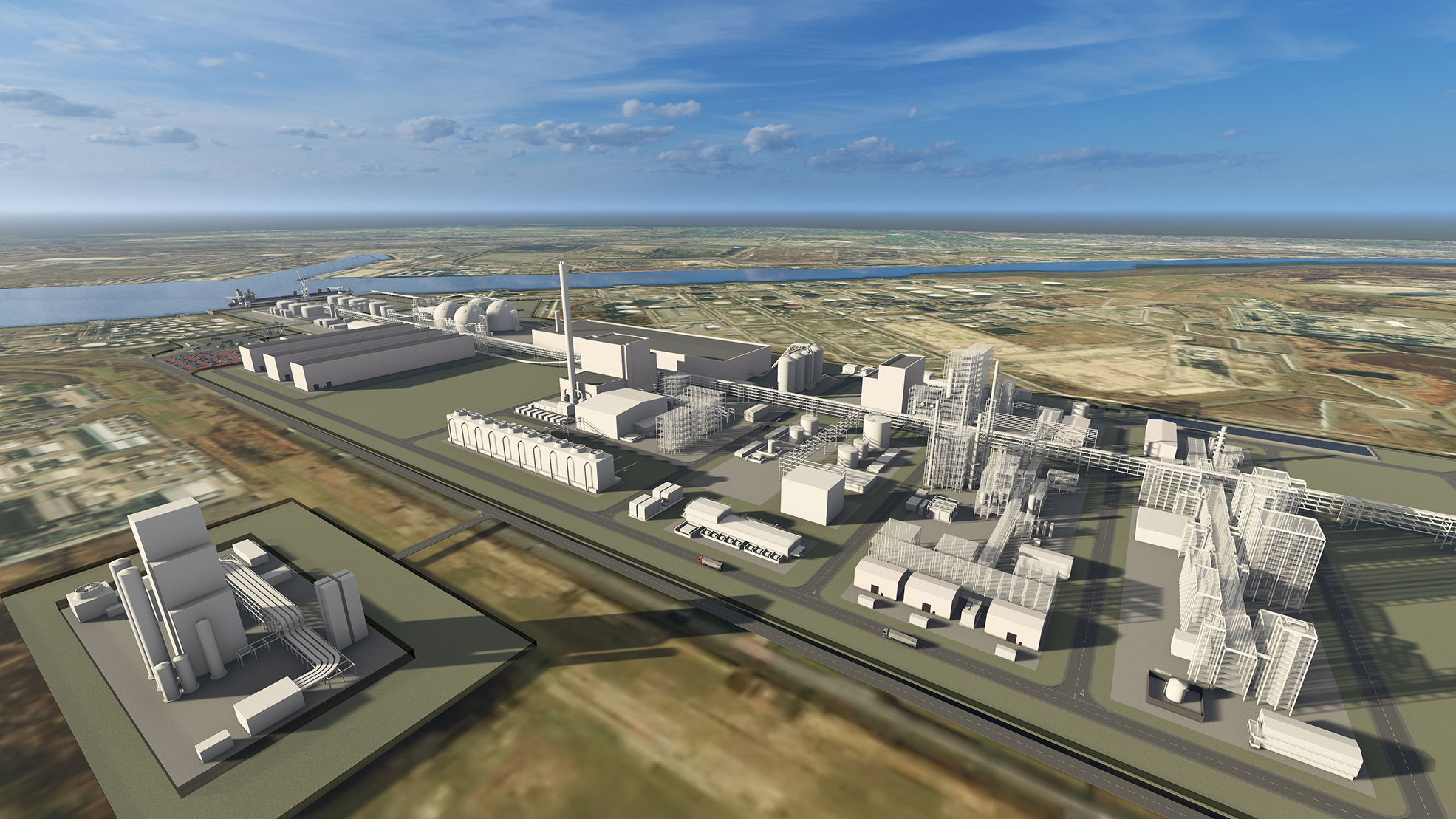
Located in Teesside, LGF is being developed as the world’s largest and most advanced second-generation SAF facility. It will convert sustainably-sourced biomass into aviation fuel using proven Fischer–Tropsch technology - producing 180 million litres of SAF each year: enough to power around 4,500 transatlantic flights annually.
It also represents something the UK has not seen for decades: a new refinery-scale project, built on domestic capability, anchoring industrial growth in a region with a deep energy heritage.
This matters because fuel security is not just about supply. It is about where that supply comes from, who controls it, and how resilient it is under pressure.
A global market taking shape
The shift towards synthetic and sustainable fuels is already underway.
Major economies including the US, China and Brazil are investing heavily in SAF production capacity. As fossil reserves decline and demand for lower-carbon fuels increases, these markets will define the future of aviation fuel supply.
Without domestic production, the UK risks maintaining its dependence - substituting imported kerosene with imported SAF. That would leave the same structural exposure in place, shaped by external markets and competing global demand.
That does nothing to improve resilience.
Building a new UK fuel industry
That’s why domestically produced fuels are the answer: designer fuels with the same performance as kerosene, made at home.
Domestically produced SAF creates the foundation for a new UK fuel industry, built on advanced manufacturing, engineering expertise and widely available feedstocks such as forestry residues and agricultural by-products.
Projects like LGF provide a starting point for that transition. They demonstrate how the UK can begin to:
- Reduce reliance on imports
- Diversify fuel supply
- Support regional economies like Teesside
- Strengthen long-term energy security
Once operational in 2032, LGF alone is expected to supply a meaningful share of the UK’s SAF requirement, helping to establish a domestic production base from which the sector can scale.
Securing the future of UK aviation
Aviation will remain dependent on liquid fuels for decades to come. The strategic question is whether those fuels are sourced from volatile international markets or produced domestically within a more controlled and resilient system.
SAF provides a practical route to domestic supply, supporting economic stability, industrial growth and national resilience without waiting for technologies that are still years from maturity.
But infrastructure alone is not enough. Building a domestic fuel industry requires both projects and policy: long-term, stable frameworks that give investors the confidence to scale production.
Mechanisms like the SAF Mandate and Revenue Certainty Mechanism are critical in this respect - and that framework itself is already beginning to evolve in support of delivery. The government has recently confirmed that Lighthouse Green Fuels will be one of the first major infrastructure projects to benefit from a Lead Environmental Regulator model, with the Environment Agency acting as a single point of coordination across approvals.
By streamlining what has historically been a fragmented regulatory process, this approach reduces delays, lowers development risk, and accelerates the transition from planning into construction - without compromising environmental standards.
In a world where energy systems can be disrupted with little warning, the case for shifting to UK-grown sustainable aviation fuel is clear.
Projects like LGF are part of a broader transition towards multiple facilities, diversified supply, and a resilient, UK-based fuel system.
Bringing fuel production within our own borders means we can keep flying beyond them.
%20-%20WDN%202.jpg)

Stay Updated on the Journey to Jet Zero
Follow the latest developments from Lighthouse Green Fuels as we progress one of the world's most advanced Sustainable Aviation Fuel facilities in Teesside.