The Case for Second-Generation SAF: Engineering Certainty at Commercial Scale
For at least the next two decades, Sustainable Aviation Fuel (SAF) is the only viable route to materially reducing aviation emissions using today’s aircraft, engines and infrastructure. Aircraft cannot electrify at pace, battery power is expected to be limited to short-haul flight and hydrogen remains a long-term prospect. If aviation is to decarbonise this century, SAF must do the heavy lifting.
But not all SAF is created equal.
The pathway used to produce SAF determines whether the industry can scale fast enough to meet demand, or whether it remains constrained by limited feedstocks and fragile supply chains. This is where the distinction between HEFA and second-generation SAF becomes critical.
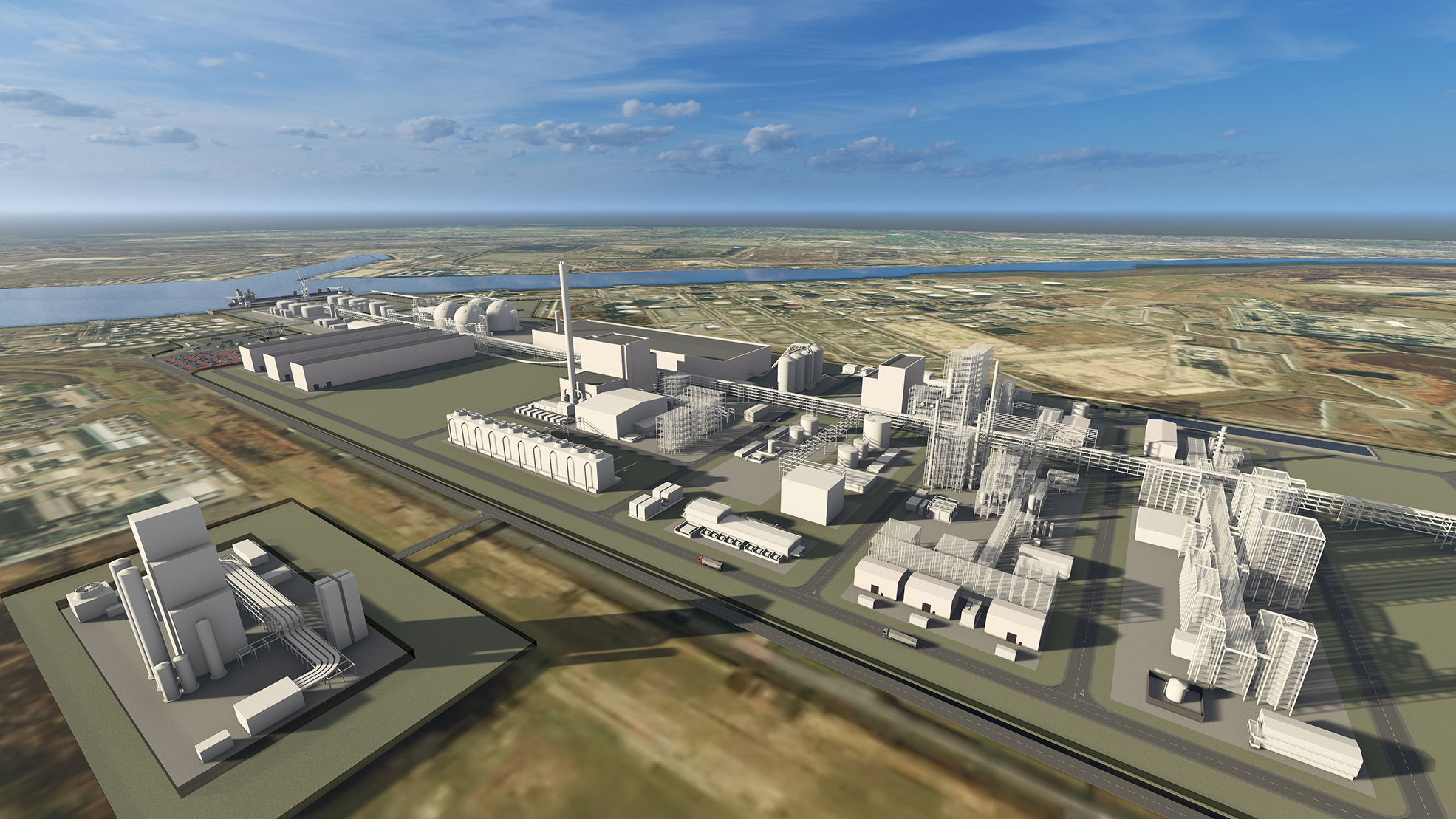
And, in the UK, that distinction is no longer theoretical. Lighthouse Green Fuels is developing one of the world's largest second-generation SAF project - a fully integrated facility in Teesside that is moving from design into delivery. With Front-End Engineering Design (FEED) close to completion and development consent progressing, the project is currently the most advanced second-generation SAF project in the UK.
HEFA vs second-generation SAF: a basic distinction
HEFA - Hydroprocessed Esters and Fatty Acids - is currently the most widely deployed SAF pathway. It converts oils and fats into jet fuel through a relatively simple hydrotreating process. HEFA has been the first SAF pathway to reach commercial deployment.
However, HEFA’s limitation is its feedstock: it relies on a narrow pool of oils and fats, such as used cooking oil and animal fats, that are already in demand across road fuels, chemicals and consumer markets. These materials are finite, globally traded and increasingly constrained.
In simple terms, HEFA-based fuel can only scale as far as it can collect - and compete for - these oils.
Second-generation SAF takes a fundamentally different approach. Rather than relying on oils and fats, it converts solid biogenic waste and residues into fuel. This dramatically expands the available feedstock pool and removes dependence on a single class of globally traded commodities.
This distinction is increasingly reflected in policy. Starting in 2030, the UK SAF Mandate explicitly limits the role of HEFA and prioritises second-generation pathways with lower lifecycle carbon intensity. By 2032, when Lighthouse Green Fuels is expected to be operational, the project is expected to supply around 10% of the UK’s total SAF Mandate, and almost 40% of the UK’s non-HEFA SAF fuel mix - making it acritical contributor to delivering the mandate in practice.
In other words, regulation is beginning to align with the underlying engineering reality: scalable aviation decarbonisation requires second-generation solutions- and projects like Lighthouse Green Fuels play a system-level role in making that transition deliverable.
What “sustainably-sourced biomass” actually means
Second-generation SAF depends on sustainably-sourced biomass.
This refers to biogenic residues and by-products that already exist within established material streams and are not suitable for higher-value uses like food.
These include:
Forestry residues - such as thinnings, treetops and low-grade material
Sawmill residues - like offcuts, bark and processing by-products
Agricultural residues - such as husks and similar by-products.
Crucially, these materials are not food-grade, not old growth forests and not diverted from construction, manufacturing or farming. They are already part of today’s system, often under-utilised or disposed of through less efficient routes.
In our approach, second-generation SAF becomes part of a more efficient and pragmatic industrial material system - one that improves how existing biogenic residues are managed, without creating new demand for land or resources.
From biomass to jet fuel: the process in plain English
Second-generation SAF is not produced by burning biomass, but through a controlled conversion process that rebuilds it into aviation fuel.
Our process begins with feedstock preparation which ensures the residues are cleaned, processed and homogenised for consistent performance. These materials are then converted under high heat into a synthesis gas. That gas is recombined using proven synthesis technology to form liquid hydrocarbons - fuel molecules that are chemically identical to conventional jet fuel. Finally, the fuel is refined to meet aviation specifications and blended seamlessly into existing supply chains.
The result is a drop-in aviation fuel that is fully compatible with today’s aircraft and infrastructure.
Why integration matters: LGF’s differentiator
Many SAF projects focus on individual steps in the production process. Lighthouse Green Fuels is different.
LGF is being developed as a fully integrated, single-site biomass-to-fuel facility, meaning the entire production chain - from feedstock preparation through to final product - operates as one engineered system. This integration materially reduces execution risk, delivers more predictable fuel yields, simplifies lifecycle carbon accounting and enables carbon capture to be designed in rather than bolted on later.
Integration is an engineering decision that underpins deliverability, bankability and long-term performance of the LGF project. Feedstock testing is already in advanced stages and the project is progressing through planning, contractor selection and financing - translating engineering decisions into delivery timelines.
The role of carbon capture
By integrating with Teesside’s planned carbon capture and storage (CCS) infrastructure, Lighthouse Green Fuels is able to capture biogenic CO₂ generated during SAF production - both from the core conversion process and, over time, through post-combustion carbon capture (PCC).
This enables more CO₂ to be captured than is emitted across the fuel’s lifecycle, making carbon-negative SAF production possible. With core process CO₂ capture in place, LGF’s SAF can deliver over 200% net greenhouse gas reduction compared to fossil jet fuel, equivalent to offsetting the annual emissions of around 4,500 transatlantic flights between London and New York.
At a system level, this materially changes the role SAF can play. With carbon capture integrated, SAF moves beyond being solely an emissions-reduction tool and becomes part of a net-removal pathway - capable of offsetting a significant share of residual aviation emissions while supporting the UK’s wider decarbonisation objectives.
Why second-generation SAF matters for the UK
Rather than simply requiring fuels to meet a minimum carbon intensity threshold, the UK SAF Mandate prioritises fuels that deliver the greatest carbon savings. Ultimately, this enables advanced projects like LGF and will ensure that SAF deployment delivers genuine, sustained decarbonisation.
Coupled with CCS, second-generation SAF can achieve ultra-low lifecycle emissions. The UK is uniquely positioned in this regard, with access to around one-third of Europe’s carbon storage capacity in depleted oil and gas reservoirs and saline aquifers, alongside established industrial and offshore infrastructure. This creates a clear pathway for the UK to produce some of the lowest-CI SAF globally and establish a world leading SAF industry.
In doing so, second-generation SAF offers the UK a scalable solution for one of the hardest sectors to decarbonise, greater energy security through diversified feedstocks, reduced reliance on volatile global commodity markets, and the opportunity to build a new industrial capability rooted in UK infrastructure.
That is what will deliver real decarbonisation - alongside skilled jobs, regional investment and long-term economic value.
Engineering certainty for aviation’s next chapter
By combining biogenic feedstock, proven conversion technology and a fully integrated production model, Lighthouse Green Fuels is building a SAF facility designed for engineering certainty, at industrial scale.
And in the UK, taking a global lead, that scale is now moving from engineering design into on-the-ground delivery.
To follow progress on the UK’s largest second-generation SAF project, sign up for quarterly updates through our newsletter, LGF Dispatch.
%20-%20WDN%202.jpg)
.png)
Stay Updated on the Journey to Jet Zero
Follow the latest developments from Lighthouse Green Fuels as we progress one of the world's most advanced Sustainable Aviation Fuel facilities in Teesside.