FEED Completed: What This Milestone Means for Lighthouse Green Fuels
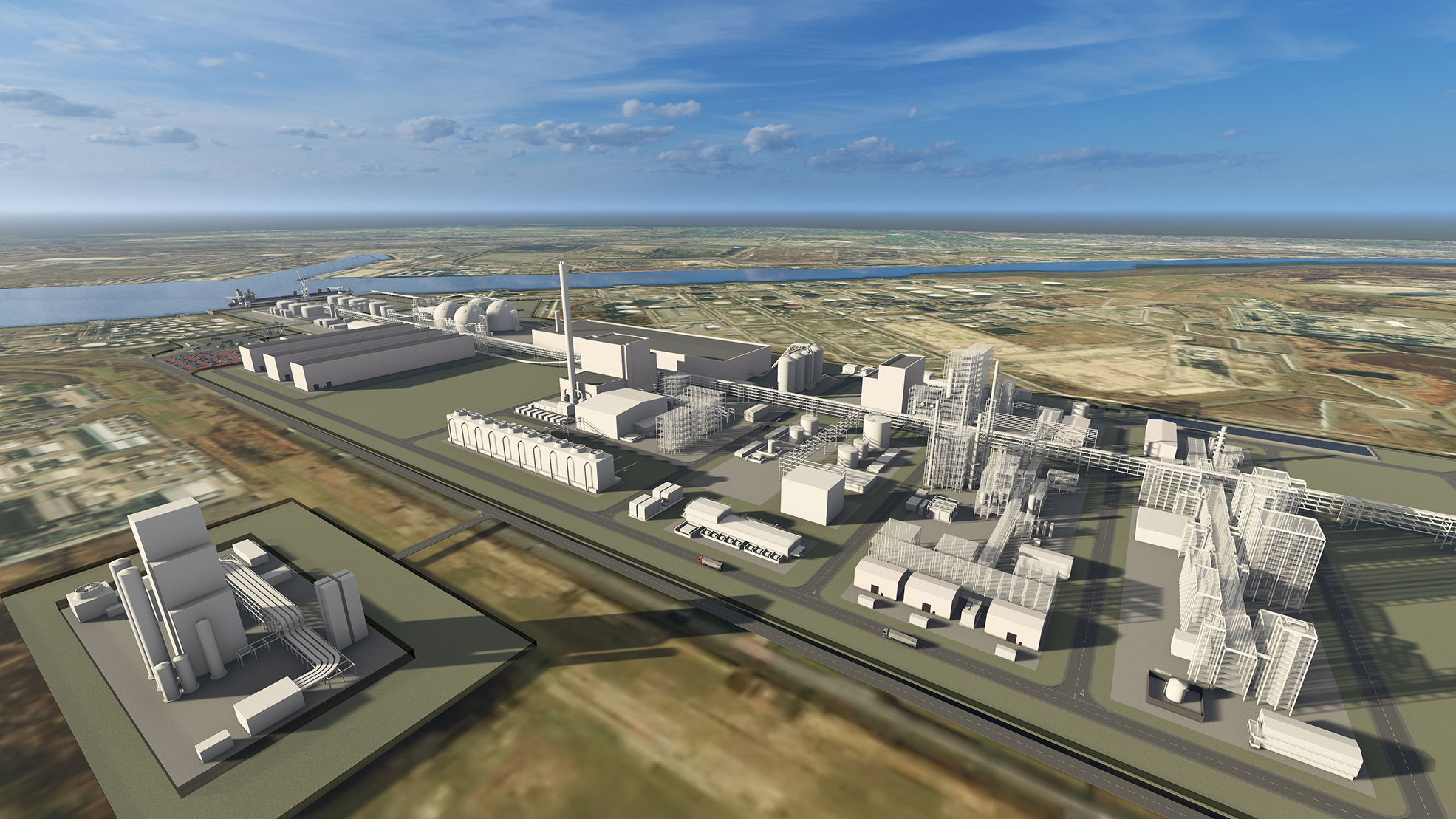
Lighthouse Green Fuels (LGF) has successfully completed Front-End Engineering Design (FEED) for its Sustainable Aviation Fuel (SAF) facility in Teesside, delivered in partnership with engineering contractor Worley.
For any major infrastructure project, FEED is one of the most significant stages in development, marking the point where a project moves into detailed engineering reality.
Completing FEED confirms the technical integration, engineering configuration and delivery strategy for what is expected to become one of the world's largest second-generation SAF facilities.
But what exactly is FEED? And why is it such an important milestone for the UK more broadly?
From concept to detailed design
Large industrial projects are developed in stages.
During Front-End Engineering Design, engineers take the chosen concept and develop it into a mature engineering design that can ultimately be built and operated. Every major component of the facility is analysed, integrated and costed through extensive engineering work.
For us, this has included comprehensive design work across feedstock handling, gasification, Fischer-Tropsch fuel synthesis, utilities, storage infrastructure and future integration with carbon capture and storage infrastructure.
The result is an engineering blueprint for the facility.
Why FEED matters
FEED allows project teams to validate that technologies will work together as intended and develop credible procurement and construction plans. Its completion demonstrates that the project has moved well beyond the conceptual stage and is now supported by thorough engineering and a clear pathway towards Final Investment Decision (FID).
FEED completion is clearly important from an engineering perspective, but it’s also significant in a much broader strategic context.
Today, the UK produces only a fraction of the jet fuel it consumes, relying heavily on imported supply. Recent disruption to global energy and shipping markets has highlighted how vulnerable critical fuel supply chains can become when they depend on international production and transport networks.
Aviation will continue to rely on liquid fuels for decades to come. While electric and hydrogen technologies are progressing, they are not expected to play a significant role in long-haul aviation in the foreseeable future.
That means the strategic question is no longer whether liquid fuels will be needed, but where those fuels will be produced.
Projects like Lighthouse Green Fuels provide part of the answer.
By producing SAF domestically from sustainably sourced biomass feedstocks, the project has the potential to strengthen UK fuel resilience, diversify supply chains and reduce long-term reliance on imported fuel.
In that sense, FEED completion represents another step towards establishing a new domestic fuel industry and restoring refinery-scale fuel production capability in the UK for the first time in generations.
Building one of the world's most advanced SAF facilities
Located at Seal Sands in Teesside, LGF is being developed as a fully integrated second-generation SAF facility.
Once operational, the project is expected to produce 180 million litres of Sustainable Aviation Fuel and 30 million litres of renewable naphtha annually from sustainably sourced biomass feedstocks, including forestry and agricultural residues.
The facility will utilise a commercially proven gasification Fischer-Tropsch pathway, a technology route widely recognised as one of the most credible options for large-scale advanced SAF production.
The project is also designed to integrate with Teesside's carbon capture and storage infrastructure, enabling the production of carbon-negative SAF and potentially delivering lifecycle greenhouse gas reductions of more than 200% compared with conventional jet fuel.
A major milestone for UK SAF
The UK has set ambitious targets through the SAF Mandate, recognising SAF as the most important decarbonisation pathway available to aviation in the near and medium term.
Delivering those targets requires projects capable of producing SAF at industrial scale.
Completion of FEED confirms that Lighthouse Green Fuels is progressing towards that goal. It establishes the engineering foundation for a project that is expected to become the UK's first new refinery development since the 1960s and one of the most advanced second-generation SAF facilities globally.
The milestone follows a series of recent developments across the project, including securing the Seal Sands site, progressing carbon capture integration, advancing feedstock agreements and continuing work towards SAF offtake arrangements.
The road ahead
Completion of FEED confirms that LGF is no longer simply a vision for the future of SAF. It is now a fully engineered project progressing towards delivery.
As the UK seeks to strengthen fuel security, support industrial growth and deliver its SAF ambitions, projects capable of operating at commercial scale will be critical.
FEED provides the engineering foundation for that next phase.
For us, it marks a defining project milestone - and for the UK, it is another step towards building a domestic SAF industry capable of supporting both aviation decarbonisation and long-term fuel resilience.
%20-%20WDN%202.jpg)
.png)
Stay Updated on the Journey to Jet Zero
Follow the latest developments from Lighthouse Green Fuels as we progress one of the world's most advanced Sustainable Aviation Fuel facilities in Teesside.